by Alex Rashkovan, Co-Founder & CEO at Atalef.ai (TechIsland Member)
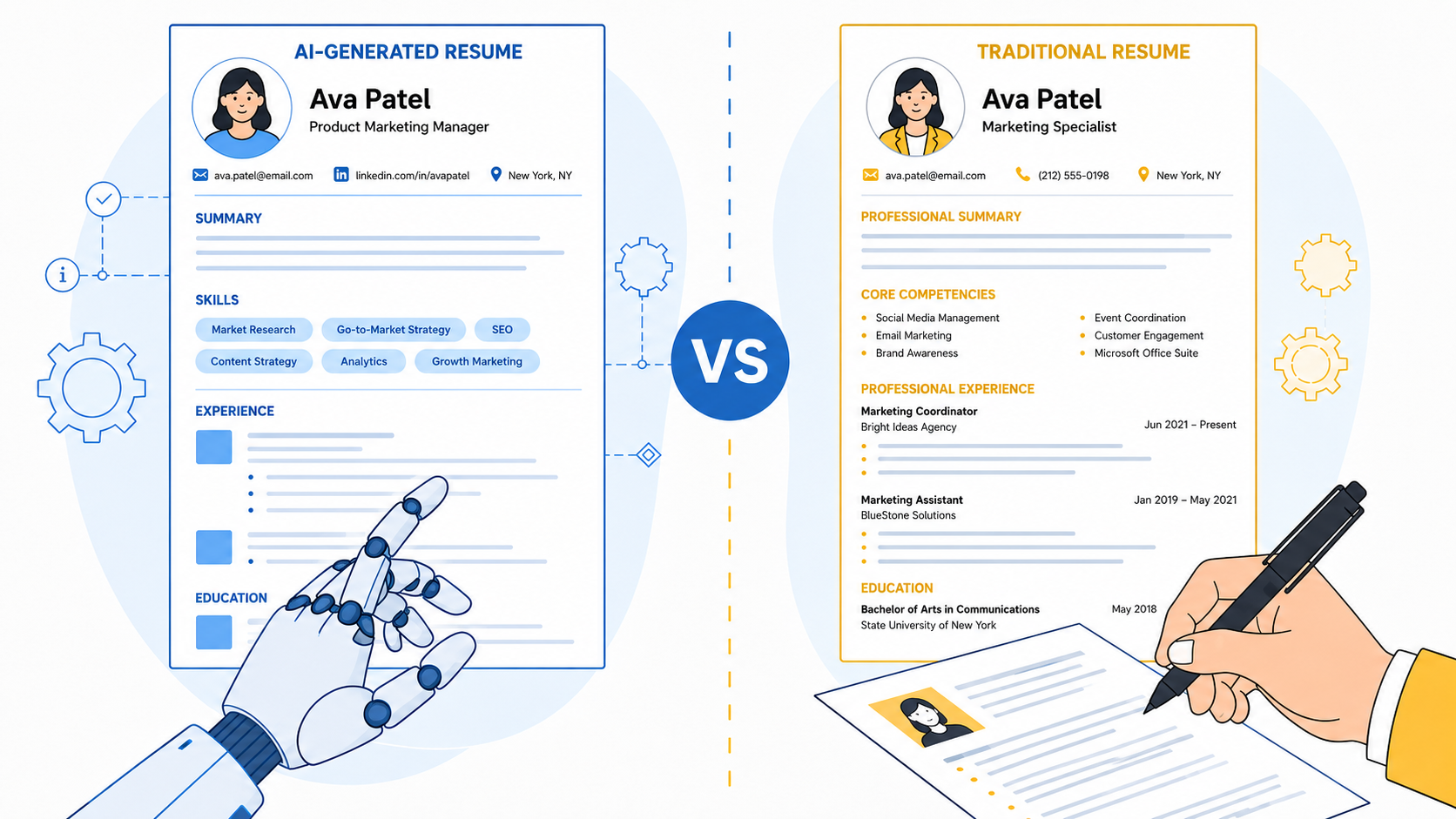
Zehra Chatoo, founder of the think tank Code For Good Now and a former Meta Strategist, generated two AI-written CVs with the exact same content. All that was changed was the name of the candidate strategically placed at the top in bold: Emily Clarke on one, James Clarke on the other. In other words, one CV was clearly a female candidate, and the latter male. Reviewers were informed that the CVs were AI-generated. What they did not know was that their responses would start an online upheaval. This is because the results of the study showed that reviewers were 22% more likely to question Emily’s (in other words, a female candidate’s) trustworthiness and twice as likely to doubt her competence. Gen Z male reviewers were also 3.5 times more likely to label Emily's résumé as "weak,” whereas James’s version received a 97% approval rating. The content was the same, but the attitude towards the two “candidates” reflected a deeply ingrained gender bias within the initial stages of the recruitment phase.
A lot can be said (and has been said both online and offline) about etiquette, authenticity, or whether candidates should disclose AI use, but that is only half the conversation. The experiment also shows how easily screening falls into the trap of subjectivity and judgments of the candidates based on cues that have little relation to capability. When the CV is used as the main filter, companies miss out on top talent.
The CV keeps bias in the funnel
A CV is a self-marketing document, a candidates 2-minutes in the spotlight to tell a captivating story. The hiring process treats the CV as a measurement tool. This creates a mismatch of priorities and expectations, which is even harder to ignore today as AI writing assistance has spread through the applicant pool.
Kickresume’s 2025 analysis of its own platform data found that among 1.22 million users, 586,000 used AI to draft or improve resume content, and 773,000 used AI to check for ATS compatibility. These numbers may be reporting internal data, but they are consistent with Employ Inc’s 2025 Job Seeker Nation survey, which found one in three job seekers used AI somewhere in their search. Those figures, of course, do not reflect every labour market, but they do provide a glimpse into the environment hiring teams are screening in, where an overly-polished, tailored CV is easier to produce and less useful as a proxy for capability. When CV quality decreases, recruiters and hiring managers tend to fall back on other cues in their filters, and most are outside of job performance, and those cues are usually where unequal treatment comes up.
This biased filtering predates generative AI. Louis Lippens, Siel Vermeiren, and Stijn Baert, writing in the European Economic Review (2023), synthesised a near-exhaustive register of correspondence audit experiments published between 2005 and 2020 and found that unequal treatment in hiring persists across multiple discrimination grounds. Taryn Eames' 2024 correspondence field experiment found that including pronouns on a CV changes employer responses, with “they/them” disclosure reducing positive responses. Nicole Schwitter, Stella Chatzitheochari, and Ulf Liebe's 2025 systematic review of 69 experimental studies on disability discrimination describes recruitment screening as a pathway that accelerates disability employment gaps.
What changes when AI screens CVs
AI can speed up screening, but it does not change what is being screened if the process still starts from CV cues such as names, gender, schools, phrasing, formatting, and employment gaps. Accountability here would mean defining who remains responsible for compliance and the final outcomes. In other words, an employer can use automated tools, but the employer still carries responsibility for the risk of discrimination, the documentation process, testing, and ongoing monitoring.
Automated screening tools still start with the CV, which means they still work from a document loaded with cues that human readers have tended to call judgment. The software processes those cues faster and across more candidates, but it does not neutralise them.
The U.S. Equal Employment Opportunity Commission warns that automated hiring tools can trigger violations of anti-discrimination law and that employers remain responsible for outcomes even when screening is delegated to technology. The UK government's Responsible AI in Recruitment guidance focuses on assurance across sourcing, screening, interview, and selection. Therefore, organisations are expected to understand what a tool is optimising for and what guardrails are in place when decisions affect the livelihood of people. NIST’s Special Publication 1270 describes how bias enters AI systems through data selection and evaluation criteria. A model reflects the material it was trained on and the assumptions used to ascribe a “good” candidate. If the training data rewards a particular type of CV, the screening tool rewards that CV.
Skills-based validation as an alternative
The World Economic Forum's Future of Jobs Report 2025 projects that 39% of existing skill sets will be transformed or outdated by 2030. Relying on the “what looks good on paper” narrative will likely lead to more dissatisfaction and mishires (not to mention unsuccessful hire costs) for companies still relying on CVs to select candidates, especially when it comes to technical personnel.
Skills-based hiring, on the other hand, asks teams to define role requirements in outcome terms before they look at candidates, then decide what evidence corresponds to each requirement. The workflow usually includes role scoping, setting job-relevant work samples where appropriate, and structured interviews that use the same core questions and scorecards across candidates so comparisons can be made on the actual answers and not impressions.
SHRM’s 7 Practical Ways to Reduce Bias in the Hiring Process (2023) identifies structured interviews and job-relevant assessments as among the most defensible levers teams can apply at scale.
Where tools fit and where Atalef fits
Hiring teams are already incorporating a recognisable tool stack. An ATS such as Workday, Greenhouse, or Lever to manage applicants and record decisions; sourcing channels to widen the pool; coding assessment platforms such as HackerRank or Codility to test technical ability; and video interviewing tools such as HireVue when volume is high. Each category can work well on its own, but the workflow often degrades when the process moves from one tool to another because evidence ends up spread across different places, and the CV becomes the easiest thing for everyone to scan.
Even when the intention is in the right place, “AI screening” leads to disappointing and costly consequences. If the first stage still begins with CV parsing and keyword filters, the hiring team has delegated the bias problem rather than addressed it. Better results come when the workflow forces the same discipline you would expect from a well-run interview loop. That is, ensuring role requirements are made as clear as possible, the evaluation criteria are consistent across each stage, and the evidence behind each choice is easy to retrieve when someone asks why (or why not) a candidate progressed.
Resumes get seconds of attention. In many funnels, software makes that call before a person does, and that is problematic. Atalef, a Cyprus-based company, was built around that gap for technical talent hiring. Their solution is a CV-free hiring model using their AI-powered algorithm DeepMatch™, the engine connecting sourcing, assessment, and shortlisting in a single workflow. DeepMatch draws candidate profiles from LinkedIn and major tech talent databases, validates them against role-specific coding challenges and assessments aligned to the actual job, and delivers shortlists backed by evidence of capability rather than quality of presentation. Atalef also describes ATS integration and database processing as ways to apply the same evaluation approach to existing applicant pools, so past applicants do not become a separate stream judged by different standards.
The final say
Chatoo’s findings, read alongside the wider research in the area, highlight a stubborn vulnerability in modern hiring. When the CV is treated as the main filter, decisions are made based on cues that are often not related to performance, and those cues can carry bias, whether the first reader is a person or software. The latter carries more risk; a process that relies on thin proxies becomes harder to justify, harder to audit, and more likely to fracture under time pressure.
A skills-based approach does not promise perfect fairness. What it can do is maintain a tighter rein on the comparison. When role requirements are clear, the evidence of compatibility to the role is tied to the work, and the evaluation criteria stay consistent across candidates, the shortlist becomes easier to defend because it rests on requirements and proof rather than presentation.
For organisations hiring technical talent, fewer assumptions at the start and a clearer record of why candidates moved forward can be the difference between a company’s success or failure down the line.