An opinion piece by Tanya Romanyukha, General Manager at TechIsland® and Director at Women in Tech® Cyprus
"How do you build a network like yours?"
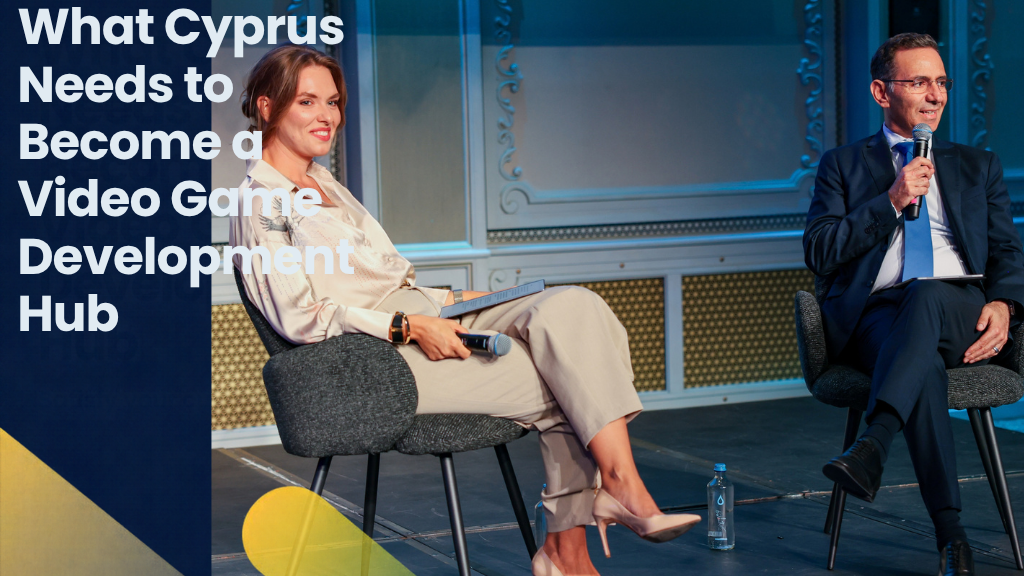
I hear this question very often. Running TechIsland® , Cyprus's largest tech association with 400+ member companies, and leading Women in Tech®Cyprus means my job sits at the intersection of hundreds of people, companies and conversations. So after Irina Gruzdeva from Andersen Europe and I hosted a webinar on the architecture of trust this week, it felt like the right moment to finally write my answer down. Here it is, plus a few things I didn't get to say on the day.
1. Why this matters more now: excellent work never spoke for itself
Irina opened our conversation with a provocative thesis: in the AI era, excellent work no longer speaks for itself. My answer was that it never did. What AI changed is the meaning of the word "excellent".
For years, you built expertise once and carried it for a decade. Today the bar moves every few weeks. AI didn't raise our ceiling, it raised our floor. Anyone can now produce a polished pitch, analysis or strategy in hours. But if you don't know what excellent looks like, you won't recognise it when the machine delivers it, or when it doesn't. The tool doesn't fix judgment. It just produces more polished versions of not knowing what you're doing.
This is exactly why networks matter more than ever. When everyone can produce impressive output, output stops being the differentiator. When clients, hiring managers and partners have ten equally polished options in front of them, they choose the person they trust. And that trust isn't built in a document. It's built in relationships, over time.
So the rest of this article is about how that trust is actually built.
2. Your network is who remembers you
One of my fellow speakers, Melania Guadix Cervera put it beautifully: your network isn't who you know, it's who remembers you. And they don't remember your deliverables. They remember how it felt to work with you.
No matter how brilliant you are, if you're unpleasant to work with, nobody will put their name behind yours.
3. Every recommendation spends borrowed trust
People ask me to recommend someone all the time. And every time I do, I'm not spending my own trust. I'm spending the trust other people have in me. That's a very limited resource, so here's how I actually sort recommendations:
- Friends I've never worked with. I say it openly: I can't judge your professional expertise. I'll ask for a favour, like a CV review or an advice call, but it's not an endorsement.
- People I've done real work with. I share what I've seen: strengths, and honestly, weaknesses too. This is where my name goes on the line.
- My wider network. People I meet at events, with no shared work. Here it comes down to chemistry and consistency: do they deliver what they promise, do we share values? I may pass on a CV, but I'll say clearly that it comes without my endorsement.
And what kills trust instantly? Overselling. And forcing closeness right before asking for something. I feel it immediately and it ruins first impression.
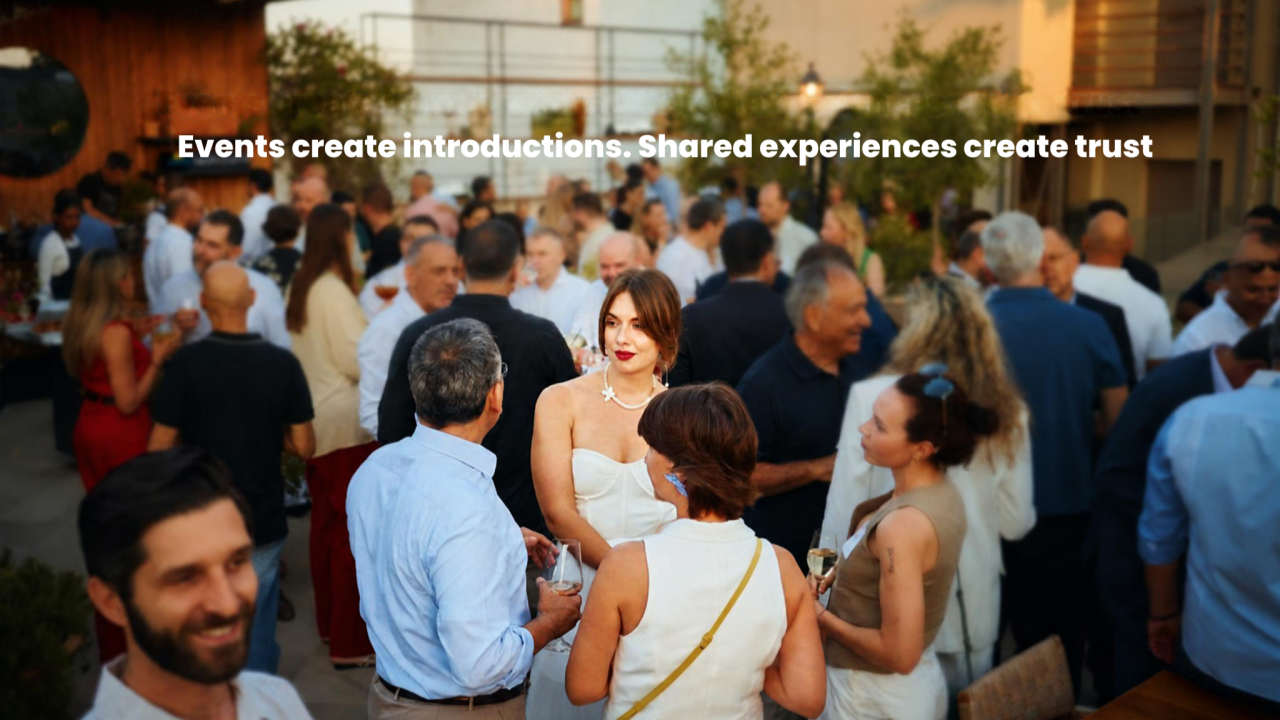
4. Events are the introduction. Communities are where trust begins
Walking around a room making small talk is step one, not the whole staircase. The real value is in communities built around a shared profession, values or interests. When you join one, you get an initial credit of trust before you even know each other: you're already on the same side.
At TechIsland, we've built professional communities for exactly this reason, and they're open to professionals in the Cyprus tech ecosystem:
- HR CY Community - for HR professionals at every level, from beginners to seasoned experts.
- FinPro Community, powered by payabl. - for CFOs, finance, accounting and treasury professionals in tech.
- MarComms Community - for marketing, PR and communications professionals.
- Legal Community - for in-house counsel, legal advisors and compliance officers in the tech ecosystem.
- TechPro Community, powered by The Vault - for CTOs, engineers, data, AI and cybersecurity specialists.
- Women in Tech Cyprus - an international community of women in tech, based in Cyprus.
(Click on the name of each community to apply)
For founders and C-level executives, we also run a private community chat that is available exclusively to TechIsland member companies. If your company isn't a member yet, you can apply to become a TechIsland member here.
Each community has its own personality. Our HR community shares memes and answers each other's questions in the chat within minutes. Legal and finance professionals are more reserved, and you can see it even in the dress code. Women in Tech has our highest conversion from registration to attendance, and members often arrive before the doors officially open.
Different dynamics, same principle: when you already share something, opening the door is much easier. If you're not part of a professional community yet, find one. It's the easiest first step you can take.
5. Go deeper through shared experience
A community creates the conditions for trust. Shared experience is what makes it grow.
I've seen this again and again in my own network. Irina, who moderated this webinar, and I met through the Women in Tech community. What turned that connection into a real relationship was travelling together to the Women in Tech Global Summit in Cape Town. We explored a new country, worked, learned, handled small challenges and had long conversations about far more than work.
We saw the same thing last weekend at TechIsland's first-ever HR Getaway. We took a small group of women from our HR community to Minthis. There were no panels, no presentations and no rushing. We did yoga, tried golf, enjoyed the spa and had long conversations over dinner. Over two days, the conversations moved naturally from AI implementation, the labour market and employee benefits to personal ambitions, fears and life, and back to AI.
That mix of professional depth, shared experience and personal openness is where real trust is built. No formal meeting or networking event can give you that.
And you don't have to wait for someone to organise it for you. Shared experiences come in many forms:
- Professional retreats and getaways. Founder retreats, leadership offsites, community getaways. Time away from the usual routine opens people up.
- Delegations and trips with a purpose. Business missions, international summits, study tours. When you travel together, you meet the real person, not only the professional.
- Interest-based journeys. Hiking trips, wellness retreats, cultural or culinary tours built around something you love.
- Learning together. An executive programme, a course or a hackathon. Solving problems side by side shows how people think.
- Sport and wellbeing. Padel has grown into a real community of its own in Cyprus, and a doubles match often becomes the start of a business conversation. Yoga classes, sound healing and meditation sessions, morning runs or a weekend hike work just as well. They're regular, informal and low pressure, and people show up as themselves.
- Shared hobbies. A book club, a wine tasting, a cooking class, a photography walk. Common interests give you something to talk about beyond work, and a reason to meet again.
The next step is the one most people skip: invite people. If you've met someone relevant and interesting, don't just wait to bump into them at the next event. Bring them along to a retreat you're joining, a trip you're planning, your weekend padel game or your yoga class. And if nothing like that exists, create it. Start small: one dinner, one walk, one shared project.
There's nothing unprofessional about building relationships on a personal level. Some of the strongest professional bonds I have started with a shared hobby, a long drive or a conversation that had nothing to do with work. People trust people, not job titles.
So when you meet someone and feel that chemistry, follow up, and look for something you can experience together.
6. Offer help before you're asked
This is one of the most underrated networking habits.
Listen carefully in conversations. Often someone mentions a challenge in passing: they're looking for a lawyer who understands tech, a good designer, someone who has already solved the problem they're facing. What is easy for you may be exactly what they need:
- an introduction to someone in your network;
- ten minutes of honest advice from your experience;
- a template, a resource or a tool that worked for you;
- a quick review of their idea, pitch or CV.
Don't wait for them to ask. Many people never will, because they don't want to impose. Just offer it. It costs you little, it can change a lot for them, and it shows that you listen, you care, and you're genuine. That's how trust starts.
7. Give your expertise away
Many of the people I'd vouch for today never worked at the same company as me. We built something together at TechIsland or Women in Tech, often on a voluntary basis. That shared work is exactly what moved them from "someone I know" to "someone I'd put my name behind".
Mentoring and volunteering are also fast routes for building trust. When you contribute to a project whose values you share:
- people see how you think, not just what you produce;
- they see whether you keep your word and how you behave when something goes wrong;
- you meet people who care about the same things you do;
- you build a reputation by helping, not by self-promoting.
My practical advice: choose something that matters to you, offer & commit and to a clear role rather than a vague "happy to help", and show up consistently. Mentor a founder, join a community working group, support a programme for students (we're designing the one btw!) or women in STEM. Start with one commitment and do it well.
In a world where AI can generate almost any artefact, it can't generate a track record of generosity for you.
8. Don't be parsley
Artemis Pnevmatikou once told me that in Greek, someone who shows up in every room and every conversation is called "parsley", because it goes into every dish.
Don't be parsley. You don't need to attend every event. Decide who you want to build relationships with and why, then find the rooms where those people are. Your time is your energy, so choose where it goes.
9. Protect your energy for what matters
With two kids, an expat life and a very social job, I'm often exhausted by evening. When an event truly matters, I plan my day around it: I clear meetings and focus on the work that gives me energy rather than drains it. If you don't plan for it, every evening ends on the sofa. And some evenings should. That's fine too.
SO,
Expertise is becoming a commodity. Trust isn't. A network gives you access. A community gives you the trust to ask for help, share what you really think and build something together. You earn that trust slowly, through consistency, honesty, shared experience and generosity, and you spend it carefully.
Where do you give your time and expertise? I'd love to hear which communities or projects have shaped your network the most.
Thank you to Irina for co-hosting the webinar Architecture of Trust: Network Design in the AI Era and to Anna and Melania for a brilliant conversation. Watch the full webinar below: